


Do Fender Flares Affect Tyre Legality on a 4WD in Australia?
Wider tyres, a suspension lift, or a set of aftermarket rims can all push your tyres past the edge of your factory guards — and that's when a routine roadworthy check can turn into a defect notice. One of the most common questions we get from 4WD owners upgrading their rig is whether fender flares actually make their setup legal again, or whether they're just cosmetic. Here's what the rules actually say.
This article covers the Australian Design Rules (ADR) baseline for tyre coverage, how fender flares fit into that picture, what triggers non-compliance, and how to make sure your flares actually solve the problem rather than just looking the part.


The Legal Requirement: Full Tyre Coverage
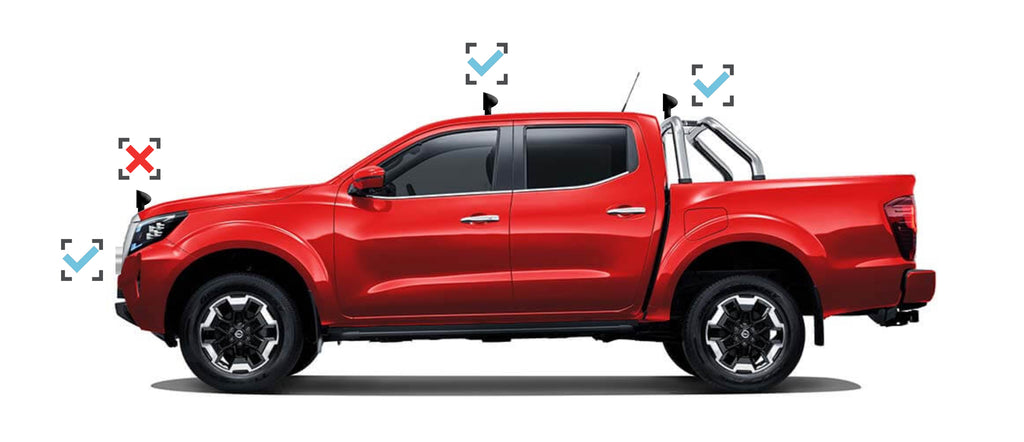
Under the Australian Design Rules and the National Code of Practice (VSB 14) that state transport authorities work from, the tyre tread on your vehicle must be fully covered by bodywork or guards when viewed from directly above, with the wheels pointing straight ahead. This isn't a guideline — it's an enforceable standard, and police or transport inspectors can issue a defect notice for exposed tread even if every other part of your modification is otherwise compliant.
Mudguards and flares are treated as part of that bodywork. If they cover the full width of the tyre, you're compliant. If tread pokes out past the edge, you're not — regardless of whether the exposed section is a few millimetres or a few centimetres.
What Actually Pushes Your Tyres Out of Coverage?
Most 4WD owners don't set out to break tyre coverage rules — it happens as a side effect of other upgrades. The usual culprits are:
- Wider aftermarket wheels — a wider rim can shift the tyre's outer edge past the factory guard line.
- Negative offset wheels or wheel spacers — pushing the wheel assembly further outboard increases your vehicle's track width, often beyond what the factory guards were designed to cover.
- Larger diameter or wider-section tyres — upgrading to a taller or wider all-terrain or mud-terrain tyre can bulge past the guard, especially through the lower arc of the wheel arch.
- Suspension lifts — a lift on its own doesn't usually cause coverage issues, but it's frequently paired with wider wheels and tyres that do.
Under VSB 14, standard passenger vehicles are generally limited to a 25mm increase in wheel track over the manufacturer's maximum, while off-road 4WDs and goods vehicles in the relevant ADR categories may be permitted up to 50mm — but only if every other requirement, including full tyre coverage, is still met. Getting the track width "technically legal" doesn't automatically mean your guards still cover the tyre.
Do Fender Flares Fix the Problem?
Yes — when they're the right flares for the job. A properly sized, vehicle-specific set of fender flares extends the guard line outward to restore full coverage over a wider track or larger tyre. That's their actual legal function, on top of the styling upgrade most people buy them for.
But not every flare achieves this. A flare needs to:
- Extend far enough to cover the tyre's new outer edge in plan view, not just visually "look wider"
- Be securely fitted, with no risk of coming loose at speed
- Have no sharp edges, in line with ADR fitment requirements
- Suit your specific tyre and wheel combination — a flare designed for factory-width tyres won't necessarily cover a set of wider mud-terrains
This is why we stock EGR fender flares, which are engineered and vehicle-specific rather than universal bolt-on pieces, and are backed by EGR's manufacturer warranty. Getting the fitment right the first time avoids paying for flares that still leave you exposed to a defect.
Fender Flares for Toyota Hilux
EGR offers colour-matched and matte black flare sets for both the pre-2020 wide-body Hilux SR/SR5 and the 2020+ facelift models, giving proper coverage for wider wheel and tyre combinations without an engineering referral in most cases.

Fender Flares for Ford Ranger
Both the PX Series and the Next Gen Ranger have EGR flare options in matte black, black bolt-style, and colour-matched finishes, covering the wider track and tyre setups common on lifted and off-road-focused builds.

Fender Flares for Isuzu D-MAX
EGR's D-MAX flares are available in colour-matched and matte black finishes across multiple model years, restoring compliant coverage for owners running upgraded wheel and tyre packages.

Fender Flares for Mitsubishi Triton
The current-generation MR Triton is covered with both colour-matched and matte black EGR flare sets, suited to owners moving up to wider aftermarket tyres.

When Flares Alone Aren't Enough
If your wheel track increase or tyre size goes beyond what VSB 14 allows for your vehicle category, flares won't make the setup legal on their own — the modification itself may need engineering approval and a compliance plate before flares can bring guard coverage into line. This is more likely if you've combined a significant lift, aggressive wheel spacers, and a much wider tyre all at once.
If you're unsure whether your current or planned setup falls into this category, it's worth getting a licensed vehicle engineer or accredited compliance workshop to check before you buy flares, rather than after.
Getting It Right the First Time
Before ordering fender flares, work through this checklist:
- Measure your current tyre coverage — check how much tread, if any, sits outside your factory guard line with wheels straight ahead.
- Confirm your wheel track increase — compare against your vehicle's ADR category limit (generally 25mm for passenger vehicles, up to 50mm for eligible 4WDs and goods vehicles).
- Choose vehicle-specific flares — sized for your actual tyre and wheel combination, not a generic universal kit.
- Have them properly fitted — secure mounting with no sharp edges, as required under the ADRs.
- Get a second opinion if your setup is aggressive — a compliance workshop can confirm whether flares alone will restore legal coverage.
Getting your fender flares right isn't just about ticking a legal box — it also protects your vehicle's paint and panels from stone chips and reduces the mud and debris thrown at other road users. It's one of the more straightforward upgrades to get right, provided you match the flare to the actual tyre setup you're running.
Shop Fender Flares at Brixton 4x4
Browse our full range of EGR fender flares or explore all 4x4 accessories and upgrades to find the right fit for your vehicle. Not sure which flare suits your wheel and tyre setup? Get in touch with our team and we'll help you choose.
Do fender flares make wider tyres legal on my 4WD in Australia?
Yes, if they're sized correctly — flares extend your guard line to restore full tyre coverage, which is the actual ADR requirement, not just a styling upgrade.
What Australian rule actually requires tyre coverage?
The Australian Design Rules and the National Code of Practice (VSB 14) require tyre tread to be fully covered by bodywork or guards when viewed from above, with wheels straight ahead.
What modifications commonly cause exposed tyre tread?
Wider aftermarket wheels, negative offset or wheel spacers, and larger-section tyres are the most common causes — often combined with a suspension lift.
How much can I widen my 4WD's wheel track and stay legal?
Passenger vehicles are generally capped at a 25mm increase, while eligible off-road 4WDs and goods vehicles may be allowed up to 50mm — but full tyre coverage still has to be met regardless.
Can fender flares alone always fix a non-compliant setup?
Not always — if your track width or tyre size exceeds VSB 14 limits for your vehicle category, you may need engineering approval and a compliance plate before flares can bring you back into line.