


Do Fender Flares Affect Tyre Legality on a 4WD in Australia?
Fitting bigger off-road tyres is one of the most popular upgrades for Australian 4WD owners – but it also raises a question we get asked constantly at Brixton 4x4: do fender flares affect tyre legality, and can they actually help you stay on the right side of the law? With utes like the Hilux, Ranger, Triton, BT-50 and LandCruiser routinely running wider rubber than they left the factory with, tyre coverage has become one of the most common compliance issues 4WD owners run into at inspection time.
In this guide, we'll explain what Australian tyre coverage rules actually require, why factory guards often fall short once you go up a tyre size, and how the right set of fender flares can bring your vehicle back into spec – without guesswork.
What Does Australian Law Actually Require for Tyre Coverage?
Vehicle modifications in Australia are governed nationally by the National Code of Practice for Light Vehicle Construction and Modification (VSB14), which state road authorities (Transport and Main Roads in Queensland, Transport for NSW, VicRoads, DIER in Tasmania, and equivalents elsewhere) use as the basis for their own modification and roadworthy rules. A consistent theme across every state is that tyres and wheels must be adequately covered by the vehicle's guards or mudflaps, so that debris, mud and water thrown up by the tyre doesn't strike other road users or vehicles.


Generally speaking, guards need to cover the tyre tread contact area, extend far enough forward and rearward of the wheel centre, and sit close enough to the tyre that the coverage is effective – not just technically present. When a vehicle is fitted with wider or taller tyres than standard, the factory guards frequently no longer meet this requirement, which is where fender flares come into the conversation.
Why Fender Flares Matter Once You Upgrade Your Tyres
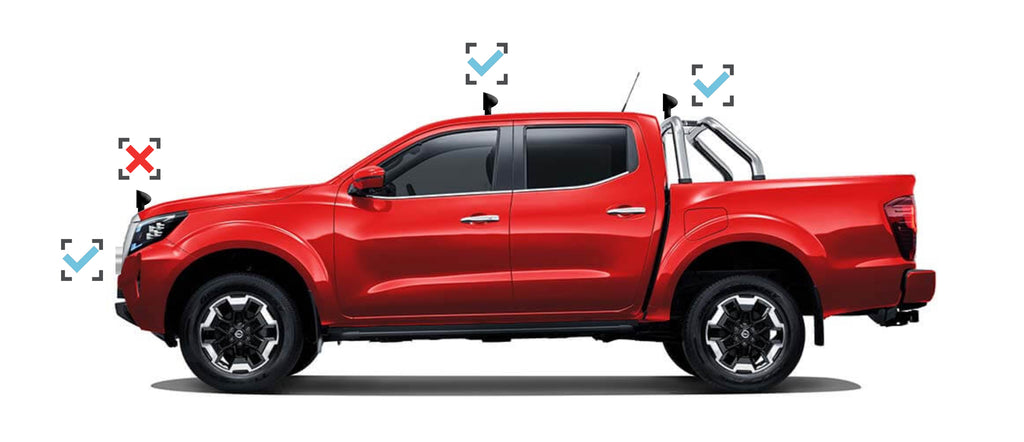
A stock Hilux, Ranger or Triton guard is only ever designed around the factory tyre size. Step up to a wider off-road tyre – even a relatively modest size increase – and it's common for the tread to sit proud of the guard line, or for the tyre to be visible from directly above. That's the exact scenario tyre coverage rules are designed to catch, and it's a common reason 4WDs get pinged at a roadworthy check or by a defect notice.
Quality fender flares extend the guard line outward and, in many cases, downward, restoring effective coverage over the wider tyre and tread. Used correctly, they're a legitimate and widely accepted way to bring a modified vehicle back within the tyre coverage requirements – but the flare has to be matched to the tyre and offset combination, not just bolted on because it looks the part.

The EGR Flares Full Set, Colour Matched for Ford Ranger PX3 is a good example of a flare designed to restore full guard coverage while keeping the factory panel lines and paint-matched finish, so the vehicle still looks like it left the factory that way.
OE-Style vs Extra-Wide: Choosing the Right Flare for Your Tyre Size
Not every flare adds the same amount of coverage, so the right choice comes down to how far your tyres sit outside the factory guard line:
- OE-style / colour-matched flares – add modest extra width and a factory-look finish, suited to mild tyre size increases where coverage is only slightly short.
- Matte black extra-wide flares – provide more aggressive coverage for larger off-road tyres and are the more common choice once you've moved to a genuinely wider off-road tyre and wheel package.
- Universal PVC flare strips – a budget-friendly, adjustable option that can be trimmed to suit a range of wheel arch shapes, useful where a vehicle-specific flare isn't available.

The EGR Mazda BT-50 Flares Full Set in Matte Black is built for exactly this scenario – genuine extra tread coverage for a BT-50 running a wider off-road tyre, in a finish that suits most tray and canopy setups without needing to be colour matched.

For owners after a simpler, vehicle-agnostic fix, the Hulk 4x4 PVC Fender Flare strip comes with a mounting kit and can be fitted across a wide range of wheel arch profiles – a practical option if you're covering a moderate tyre upsize on a vehicle without a dedicated flare kit available.
Installing Flares the Right Way – What Actually Matters for Compliance
Fitting a flare doesn't automatically make a vehicle compliant – how it's fitted matters just as much as which one you choose. A few things worth checking before and after installation:
- Coverage, not just appearance – the flare needs to genuinely extend past the tyre's outer edge and tread contact area from a straight-down view, not just sit flush with the guard.
- No sharp or protruding edges – flares (and their mounting hardware) shouldn't create a hazard to pedestrians or other road users.
- Lights, reflectors and plates stay visible – flares must never obscure indicators, tail-lights, reflectors or the number plate.
- Track width changes – if your tyre and wheel combination has significantly widened the vehicle's track (not just the guard coverage), you may need an engineer's certificate depending on your state's modification thresholds – flares alone don't resolve a track width issue.
- Secure mounting – use the specific hardware supplied with the kit; flares that flex, rattle or detach at speed can fail a roadworthy on their own merits.
Rules Vary by State – Always Check Locally
While VSB14 provides the national framework, enforcement and the fine detail of what's acceptable sits with each state and territory's road authority, and can vary depending on how significant your tyre and suspension changes are overall. If you've gone beyond a simple flare fitment – larger tyres combined with a suspension lift or a genuine track width increase – it's worth checking with your relevant state authority or a licensed vehicle modification examiner before you're due for a roadworthy inspection.
Where to Start
If you're planning a tyre upgrade, the simplest approach is:
- Fit your new wheels and tyres first, then assess how much the tread sits proud of the factory guard line.
- Choose a flare width that comfortably restores coverage – colour-matched for a mild increase, extra-wide matte black for a larger off-road tyre.
- Have the flares professionally fitted using the supplied mounting hardware, and double-check lights, reflectors and plates remain unobstructed.
- If your tyre and suspension package has meaningfully changed the vehicle's track width, get advice on whether an engineer's certificate applies in your state.
EGR backs its fender flare range with a manufacturer warranty – you can read the full terms on the EGR warranty page.
Browse our full range of fender flares for 4x4 vehicles, or get in touch with the Brixton 4x4 team if you'd like help matching a flare to your tyre size before you buy.